FOR IMMEDIATE RELEASE
April 30, 2026
MEDIA CONTACT:
Craig Butterworth
PR Coordinator
cbutterworth@vccs.edu
Virginia’s Community College System formally launches the Chancellor’s Staff Advisory Committee — giving staff employees a direct seat at the systemwide governance table for the first time.
A milestone for shared governance
The Virginia Community College System took a significant step forward in its participatory governance model this spring with the inaugural meeting of the Chancellor’s Staff Advisory Committee (CSAC). The gathering formally launched CSAC as an operational, systemwide body — marking the first time staff across VCCS have had a dedicated advisory structure comparable to that long held by faculty through the Chancellor’s Faculty Advisory Committee (CFAC).
CSAC is designed to serve in an advisory capacity to the Chancellor on issues affecting staff and the students we serve system-wide. It operates at the call of the Chancellor, deliberates on matters placed on a formal agenda, and ensures that any policy recommendations it develops are reviewed by the Advisory Council of Presidents (ACOP) prior to implementation — keeping the new council fully aligned with existing governance processes.
“Great institutions are built when decisions are shaped by the people who help fulfill our mission every day. Faculty and staff bring invaluable insight, experience, and commitment, and when they have a meaningful seat at the table through participatory governance, our colleges and system are stronger. Their voices and input are essential to who we are and how we move forward together.”
~ Chancellor David Doré
| 23
colleges represented |
3
chancellor’s advisory bodies |
1st
formal staff advisory council |
Filling a governance gap
The creation of CSAC responds directly to a recognized gap in how staff perspectives reached system leadership. While faculty enjoyed a direct line to the Chancellor through CFAC, staff had no equivalent structure. College presidents were asked to guide a peers selection process to identify staff representatives using a consistent — though not identical — process across their institutions, ensuring broad geographic and institutional representation from all 23 colleges.
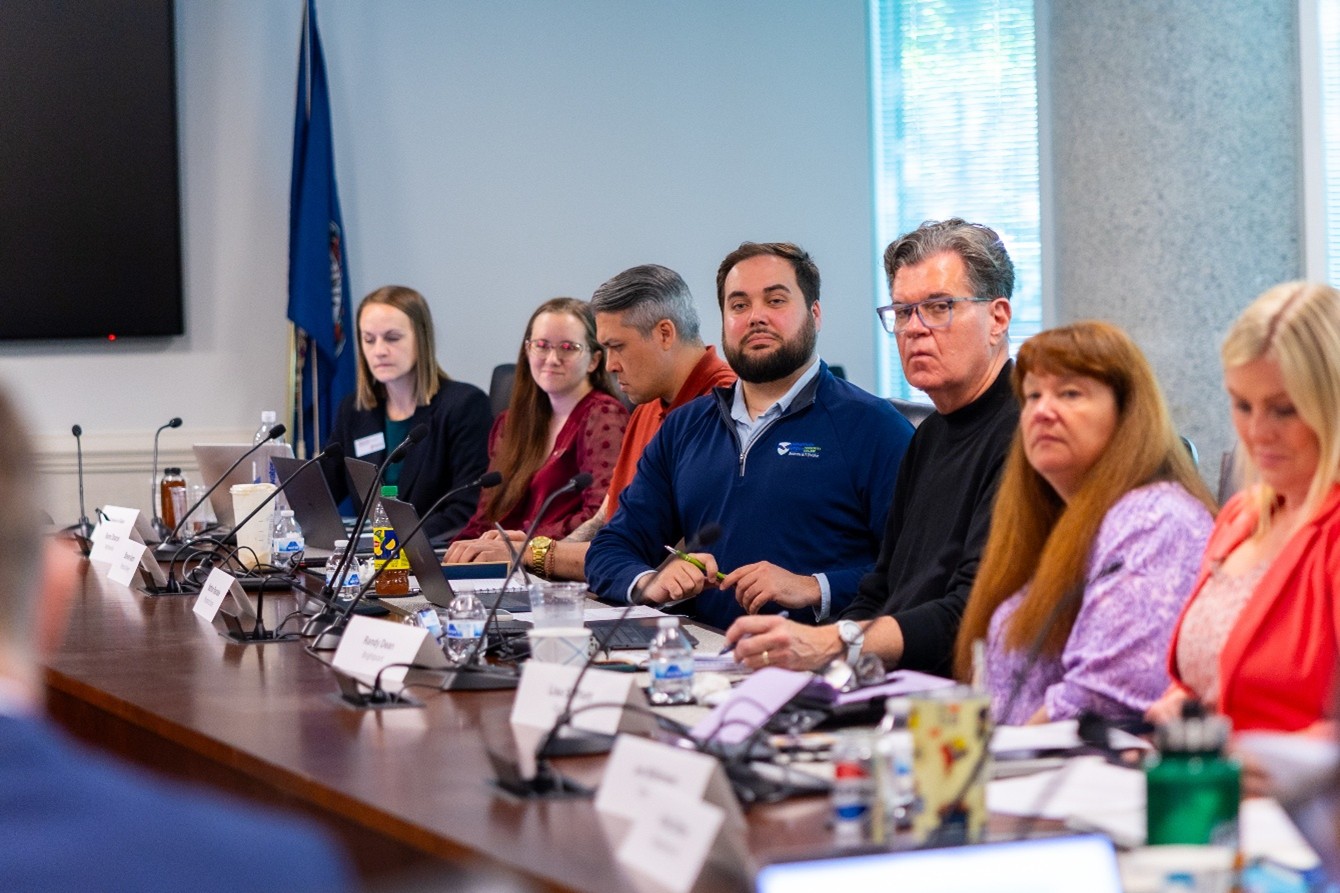
CSAC members at their first meeting
CSAC now joins ACOP and CFAC as one of the three formal governance groups coordinated through the Chancellor’s Office and host of other critical governance groups like the Academic and Student Affairs Council, the Workforce Development Advisory Council, the Council of Deans, the Administrative Services Council, the Technology Council and others, completing a more comprehensive and equitable representation model for the system.
What the first meeting covered
The inaugural session set the foundation for CSAC’s ongoing work. Members came together to:
- Learn about the committee’s purpose, charge, and role within the broader VCCS shared governance framework
- Develop a shared understanding of the advisory nature of CSAC and how its recommendations will move through the system
- Engage in direct dialogue with senior leadership on system priorities and staff perspectives
As part of the first meeting the Chancellor charged CSAC to:
- Formalize the group’s leadership by selecting a chair, vice chair, and secretary
- Propose bylaws or a charter for the Chancellor’s consideration
- Identify focus areas for the coming year or two
Inaugural leadership
Three staff leaders, selected by their peers, will guide CSAC as it establishes its work and voice within the system:
| CHAIR
Jennifer M. Wilkinson
Tidewater Community College |
VICE CHAIR
Lisa Shifflett
Germanna Community College |
SECRETARY
Tabitha Driver
Eastern Shore Community College |
“Participatory governance is strongest when faculty and staff are empowered to share ideas, ask questions, and lead. When their voices are fully engaged, institutions are built from within—through shared leadership, mutual respect, and a shared commitment to our colleges and our students.”
~ CSAC Chair Jennifer M. Wilkinson

Chancellor Doré, flanked by Dr. Craig Herndon and Dr. Felicia Ganther, listens attentively during CSAC’s inaugural meeting.
What comes next
With its first meeting successfully convened, CSAC is now operational and positioned as an ongoing advisory body within VCCS governance. Their work going forward will focus on elevating staff voices, informing the Chancellor’s decision-making, and strengthening the system’s commitment to shared governance across all 23 colleges. CSAC will meet twice annually at the System Office in Richmond, Virginia.
CSAC Representatives Photos (4.17.26) – Google Docs
About Virginia’s Community Colleges
The Virginia Community College System (VCCS), founded in 1966, plays a crucial role in providing higher education and workforce training across the state. With 23 colleges serving the diverse needs of the commonwealth, VCCS supports over 230,000 students annually. Notably, Virginia’s community colleges account for nearly half (48%) of all public undergraduate students in the state. With more than 5.5 million alumni, VCCS is not just a singular institution; it represents Virginia’s commitment to accessible education. The system connects with nearly every household in Virginia through various programs, including high school dual enrollment, workforce credentials, and affordable degree pathways, making higher education attainable for all.